IoT Connected Robots: Smart Automation in Action
Posted On November 25, 2026
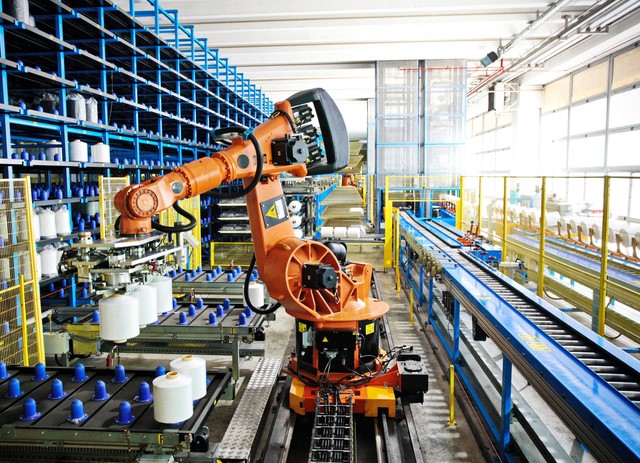
Imagine a hospital ward at 3:00 AM. A patient’s vital signs suddenly dip into a critical zone. Before a nurse can even reach the central monitoring station, a autonomous delivery unit has dispatched the exact medication required, navigated crowded hallways without human steering, and synchronized with the bedside monitor to log every millisecond of the event. No frantic shouting, no misplaced chart, and zero lost time.
Having spent more than ten years at the intersection of healthcare technology and digital infrastructure, I’ve watched robotics transform from isolated, pre-programmed industrial arms into living, communicating networks. Early on, a robot was simply a mechanical executor—blind to everything outside its pre-written code.
Today, the marriage of robotics with the Internet of Things (IoT) has fundamentally changed the game. IoT connected robots no longer work in isolation; they think, communicate, and adapt across interconnected digital ecosystems in real time.
Beyond Mechanics: What Are IoT Connected Robots?
To understand why iot connected robots represent such a massive leap forward, we must look at how legacy robotics functioned compared to modern smart automation.
Traditional robots were “deaf and mute” island systems. They performed repetitive tasks inside fixed cages. If a human walked into their path or a component was misaligned by two millimeters, the entire assembly line ground to a halt.
The Symphony Orchestra Analogy
Think of a traditional robot as a solo pianist playing a rigid piece of sheet music in a soundproof room. They can play their part flawlessly, but if the song tempo changes outside that room, they have no idea.
Now, imagine an entire symphony orchestra connected by wireless earpieces. When the conductor adjusts the tempo, every musician instantly shifts their speed, tone, and volume in perfect unison.
In this ecosystem:
-
The individual instruments are the robots and mechanical actuators.
-
The earpieces and sensors represent the IoT connectivity network.
-
The conductor is the cloud analytics or edge computing engine processing telemetry.
By combining sensor arrays, wireless communication protocols, and cloud intelligence, iot connected robots transform isolated machinery into a unified, responsive swarm.
How IoT Connected Robots Work Under the Hood
Underneath the sleek outer casing, iot connected robots rely on a multi-tiered architecture that seamlessly blends hardware, networking, and cloud computing.
+-------------------------------------------------------------------+
|               Edge Sensors & Physical Actuators                   |
|          (LiDAR, Cameras, Gyroscopes, RFID Readers)               |
+-------------------------------------------------------------------+
                                  |
                                  v
+-------------------------------------------------------------------+
|            IoT Connectivity Layer & Protocols                      |
|              (5G, Wi-Fi 6E/7, MQTT, OPC UA, BLE)                  |
+-------------------------------------------------------------------+
                                  |
                                  v
+-------------------------------------------------------------------+
|         Edge Computing & Cloud Orchestration Engine               |
|      (Fleet Management, Digital Twins, AI Path Planning)          |
+-------------------------------------------------------------------+
1. Data Harvesting via Embedded Sensors
Every smart robot is packed with environmental sensors. LiDAR arrays map physical room layouts in real time, optical cameras process visual input through computer vision, and ultrasonic proximity sensors prevent collisions with human workers.
2. Low-Latency Edge Connectivity
Robots cannot wait seconds for a server across the globe to tell them to stop if an obstacle appears. They utilize ultra-low latency wireless channels—such as 5G private networks and Wi-Fi 6E/7—to transmit telemetry and receive commands in milliseconds using lightweight IoT protocols like MQTT and CoAP.
3. Fleet Intelligence and Digital Twins
Rather than processing everything locally, iot connected robots feed their sensor telemetry into centralized fleet management software. This creates a Digital Twin—a live, virtual replica of the physical working environment—allowing cloud systems to optimize routes, balance workloads, and predict bottlenecks dynamically.
Transformative Use Cases Across Critical Industries
During my field consultations in healthcare facilities and automated logistics centers, I have seen iot connected robots deliver immediate, measurable impact:
-
Healthcare & Telemedicine Support: Autonomous Mobile Robots (AMRs) transport biohazardous waste, deliver sterile surgical tools, and disinfect patient rooms using targeted UV radiation, allowing medical staff to focus entirely on direct patient care.
-
Smart Warehousing & Supply Chain: Autonomous forklifts and sorting units collaborate across giant fulfillment centers. If one robot detects a spill in Aisle 4, it instantly alerts the rest of the fleet to re-route around the hazard.
-
Precision Agriculture: Connected agricultural drones scan crop fields for soil moisture and pest infestations, sending real-time coordinate data to ground-based robotic sprayers that apply targeted treatment only where needed.
-
Industrial Infrastructure Inspection: Robotic crawlers equipped with thermal sensors inspect volatile oil pipelines or hazardous power grids, streaming structural integrity diagnostics to engineers safely stationed miles away.
Technical Comparison: Traditional Robots vs. IoT Connected Robots
To highlight how form and function have evolved, let’s analyze how standalone machinery stacks up against iot connected robots:
| Architecture Metric | Legacy Standalone Robots | Next-Gen IoT Connected Robots |
| Data Interoperability | Siloed, proprietary local storage | Open IoT protocols (MQTT, OPC UA, REST APIs) |
| Operational Flexibility | Fixed paths & pre-programmed scripts | Dynamic path planning & real-time re-routing |
| Maintenance Model | Reactive (Fix when broken) | Predictive (AI telemetry detects wear early) |
| Human Collaboration | High risk; requires protective cages | Safe cobot operation via proximity sensing |
| System Scalability | High cost to reconfigure manually | Scalable cloud fleet management software |
Expert Advice: Pro Tips and Hidden Pitfalls
Deploying iot connected robots into an active environment requires balancing operational efficiency with rigorous security. Here are crucial insights from hands-on deployment:
💡 Pro Tip: Prioritize Edge Computing for Safety-Critical Tasks
Don’t rely 100% on cloud processing for immediate hazard avoidance. Ensure your robotic hardware runs Edge AI locally on internal microprocessors for real-time safety decisions (like emergency stopping), while reserving the cloud for high-level fleet optimization and long-term analytics.
⚠️ Hidden Warning: Secure Your IoT Endpoint Attack Vectors
Every connected sensor and network module on a robot is a potential entry point for malicious actors. Unsecured robotic fleets can be compromised through unauthorized firmware manipulation or man-in-the-middle attacks. Always enforce strict Zero-Trust Architecture, end-to-end encryption, and robust mutual TLS (mTLS) authentication across your fleet.
Final Thoughts: The Horizon of Autonomous Collaboration
The evolution of iot connected robots marks a fundamental shift from dumb mechanical automation to intelligent, collective ecosystem awareness. By merging physical mobility with cloud intelligence and sensor networks, we are creating work environments that are safer, vastly more efficient, and infinitely scalable.
As 5G integration matures and edge computing hardware becomes lighter and more powerful, smart robotic fleets will cease to be a futuristic luxury—they will become the standard engine powering modern society.
What’s Your Take?
Are you seeing iot connected robots entering your industry yet, or do you have concerns regarding network reliability and cybersecurity in automated environments?
Drop your thoughts or questions in the comments below, and let’s get the conversation started!
About The Author
