IoT Device Connectivity: Ensuring Seamless Networks
Posted On October 30, 2026
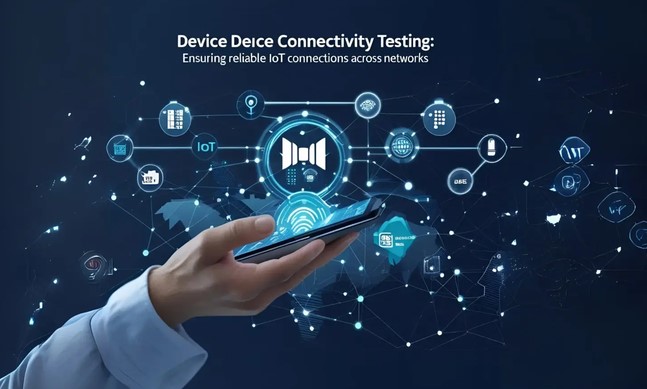
Picture a modern smart hospital wing: patient monitors track real-time ECG signals, automated insulin pumps calculate dosages, and environmental sensors regulate room air quality. Now imagine a sudden network drop—a brief ten-second connectivity lag—that causes critical telemetry alerts to buffer or vanish into thin air.
Over my ten-plus years working hands-on at the cross-section of health technology and enterprise hardware, I have spent late nights in server rooms and clinical control centers troubleshooting dropped data packets. Early in my engineering journey, I made the classic rookie mistake: assuming that if a device had a strong Wi-Fi signal, it had reliable connectivity.
The reality is far more subtle. True IoT device connectivity is not just about getting a signal; it is about building a robust, low-latency, and redundant network ecosystem capable of maintaining thousands of simultaneous micro-transmissions without missing a beat.
Here is a deep dive into how Internet of Things (IoT) networking actually works, the core protocols powering connected ecosystems, and how to build seamless networks for home or industrial applications.
What Makes IoT Device Connectivity Unique?
To understand why connected sensors require specialized networking, think of standard Internet traffic like heavy freight trucks hauling massive containers (HD video streams, web pages, software downloads) down a multi-lane highway.
IoT traffic, on the other hand, operates like a fleet of thousands of tiny delivery scooters. Each scooter carries only a tiny envelope of data—a temperature reading, a GPS coordinate, or a heart rate value—but they hit the road every few milliseconds.
┌───────────────────────────────────────────────────────────┐
│              IoT DEVICE CONNECTIVITY ARCHITECTURE         │
├──────────────────────────┬────────────────────────────────┤
│ Perception Layer         │ Sensors, Actuators, Wearables  │
│ Network Protocol Layer   │ MQTT, CoAP, BLE, Thread, NB-IoT│
│ Edge Gateway Layer       │ Protocol Translation & Filtering│
│ Cloud Application Layer  │ Data Analytics & Visualization │
└──────────────────────────┴────────────────────────────────┘
If you send thousands of scooters onto a highway built exclusively for heavy freight trucks, traffic comes to a screeching halt. Standard Wi-Fi and 4G protocols are often too power-hungry and bandwidth-heavy for micro-data transmissions, making specialized low-power protocols essential.
Decoding the Connectivity Stack: Short vs. Long-Range Protocols
Selecting the right protocol for IoT device connectivity depends heavily on physical placement, battery constraints, and transmission range requirements:
1. Short-Range Mesh Protocols (Smart Homes & Hospitals)
For indoor environments where devices sit close together, low-power mesh networking dominates:
-
Thread over Matter: Built on IP architecture, Thread allows smart sensors to talk directly to each other without relying on a centralized proprietary hub, forming a self-healing mesh.
-
BLE (Bluetooth Low Energy): Ideal for wearable health monitors and medical sensors that run on tiny coin-cell batteries for months at a time.
-
Zigbee 3.0: A proven low-power mesh protocol widely deployed in smart lighting and industrial facility monitoring.
2. Long-Range Low-Power Protocols (Agriculture & Smart Cities)
When sensors are spread across miles of farmland or distributed across city streets, short-range protocols fall short:
-
LoRaWAN (Long Range Wide Area Network): Operates on unlicensed sub-GHz frequencies, transmitting small data packets over distances up to 15 kilometers with battery lifespans reaching 5 to 10 years.
-
NB-IoT (Narrowband IoT): Uses existing cellular carrier towers to provide deep indoor penetration and wide-area coverage for utility smart meters and logistics tracking.
Technical Comparison: Popular IoT Protocols
| Protocol | Typical Range | Bandwidth / Speed | Power Consumption | Primary Use Case |
| Thread / Zigbee | 10 – 100 meters | ~250 kbps | Extremely Low | Smart homes, indoor health monitoring |
| Wi-Fi 6 / 6E | 30 – 50 meters | Up to 9.6 Gbps | High | Video cameras, high-throughput medical equipment |
| LoRaWAN | 2 – 15 kilometers | 0.3 – 50 kbps | Ultra Low | Agriculture, smart meters, outdoor tracking |
| NB-IoT / Cellular | Up to 15 kilometers | ~200 kbps | Low to Moderate | Smart city infrastructure, fleet telemetry |
Core Operational Protocols: Lightweight Messaging
Connecting hardware to a network is only half the battle; devices must also communicate efficiently using lightweight messaging protocols:
-
MQTT (Message Queuing Telemetry Transport): Uses a simple publish-and-subscribe model. Instead of devices constantly pinging servers, they publish updates to a central “broker,” dramatically reducing bandwidth and CPU processing overhead.
-
CoAP (Constrained Application Protocol): Designed specifically for extremely restricted devices with limited RAM and processing power, bringing standard web API capabilities to tiny microcontrollers.
Expert Advice: Pro-Tips & Hidden Caveats
Drawing from years of auditing connected systems, here are two crucial rules every deployment team should follow:
💡 Pro Tip: Deploy Edge Gateways for Local Autonomy
Never rely 100% on cloud servers for critical decision-making. Deploy an Edge Gateway that performs local processing, data filtering, and automated rule execution. If your main internet connection drops, the edge gateway keeps local sensors, medical alerts, and security actuators functioning without interruption.
⚠️ Hidden Caveat: The Unsegmented Wi-Fi Trap & Battery Drain
Putting consumer or industrial IoT sensors on the same primary Wi-Fi network as corporate laptops creates severe security risks and accelerates battery drain. Always isolate IoT hardware on a dedicated VLAN (Virtual Local Area Network) with strict firewall rules, and ensure devices utilize power-saving modes like eDRX (Extended Discontinuous Reception) to prevent battery depletion.
Building a Resilient Connected Ecosystem
Achieving seamless IoT device connectivity is not about buying the highest-bandwidth hardware—it is about choosing the right balance between battery life, transmission range, protocol efficiency, and network isolation.
By designing redundant, mesh-capable networks backed by intelligent edge processing, you ensure your connected hardware delivers stable, real-time data when it matters most.
Join the Conversation
Are you currently building a smart home setup, managing an industrial sensor suite, or working on healthcare IoT hardware? What connectivity bottlenecks have you encountered? Share your experiences, questions, or thoughts in the comments below! Let’s discuss how to optimize your network setup.
About The Author
