Smart Building Solutions for Sustainable Cities
Posted On August 5, 2026
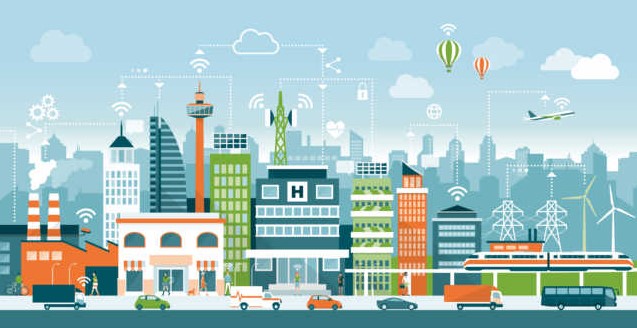
Picture this: You step into a skyscraper on a sweltering 35°C afternoon. Instead of feeling a blast of icy air conditioning that makes you reach for a sweater, the indoor climate feels effortlessly natural. The lights dim near the sunlit windows while brightening in the core of the floor. No human touches a dial.
Ten years ago, when I began architecting IoT networks for commercial properties, this seamless automation felt like a high-budget sci-fi concept. Today, it is the bare minimum requirement for urban survival. Buildings consume roughly 40% of global energy and generate nearly one-third of greenhouse gas emissions. As concrete jungles expand, deploying smart building solutions is no longer just an eco-friendly choice—it is a critical economic and environmental necessity.
What Are Smart Building Solutions? (Think of It as the Human Body)
To understand how modern infrastructure works, skip the jargon-heavy manuals. The easiest way to visualize a smart facility is to compare it to the human nervous system:
-
Sensors (The Nerves): Hundreds of tiny IoT devices scattered across walls, pipes, and ceilings continuously detect temperature, humidity, occupancy, and light levels.
-
Network Infrastructure (The Spinal Cord): High-speed protocols (like BACnet, MQTT, and 5G) transmit raw data across the property instantly.
-
Building Management System (The Brain): Centralized software analyzes incoming data streams and sends real-time commands back to physical equipment.
When these components communicate harmoniously, a property stops being a passive stack of bricks and becomes an active, responsive environment.
Key Technologies Driving Urban Sustainability
Transforming traditional structures into efficient hubs relies on a powerful tech stack. Here are the core pillars driving sustainable urban architecture today.
+-----------------------------------------------------------------------+
|                       CENTRAL AI / BMS BRAIN                          |
+-----------------------------------+-----------------------------------+
                                    |
          +-------------------------+-------------------------+
          |                                                   |
          v                                                   v
+-------------------+                               +-------------------+
|   IoT & Sensors   |                               | Predictive Maint. |
| (Occupancy, Temp) |                               | (HVAC, Elevators) |
+-------------------+                               +-------------------+
          |                                                   |
          +-------------------------+-------------------------+
                                    |
                                    v
+-----------------------------------------------------------------------+
|                    SMART GRID & ENERGY HARVESTING                     |
|                   (Solar, Thermal Storage, Microgrids)                |
+-----------------------------------------------------------------------+
1. IoT Sensors and Real-Time Environmental Monitoring
In traditional facilities, heating and cooling operate on fixed timers regardless of who is inside. Smart building solutions swap rigid schedules for dynamic adaptation. Thermal imaging and motion-sensing IoT networks track real-time occupancy, automatically routing airflow only to active zones while throttling power to empty rooms.
2. Predictive Maintenance via AI and Machine Learning
In my early engineering days, maintenance meant fixing an HVAC unit after it broke—usually on the hottest day of the year. Modern Artificial Intelligence flips this reactive model. By evaluating vibration signals and current draw from motors, machine learning models identify micro-wear long before catastrophic mechanical failure occurs.
3. Microgrids and Renewable Energy Integration
Next-generation properties do not just consume power; they produce and store it. Rooftop solar arrays paired with battery energy storage systems (BESS) allow properties to draw power during off-peak hours and feed clean energy back into the city grid during peak demand.
Real-World Impact: Efficiency Meets ROI
Implementing dynamic controls leads to immediate, measurable gains across environmental and financial metrics.
| Metric Area | Traditional Operations | Smart Building Operations | Average Impact |
| Energy Consumption | Fixed hourly schedules | Dynamic load balancing via IoT | 20% – 30% reduction |
| Maintenance Costs | Reactive (Fix when broken) | Predictive (AI pattern matching) | 15% – 25% savings |
| Equipment Lifespan | Premature wear from strain | Optimized run-cycles | 30% extended longevity |
| Occupant Comfort | Manual thermostat tweaks | Automated ambient adaptation | Higher productivity |
Pro Tips and Hidden Pitfalls from the Field
Over a decade of retrofitting structures teaches lessons you will not find in vendor brochures. If you are planning an upgrade or managing property tech, keep these hard-learned realities in mind:
Pro Tip: Prioritize Data Interoperability Over Flashy TechAlways demand open standards (like BACnet, Modbus, or open APIs) when procuring hardware. Proprietary vendor ecosystems trap you in walled gardens, making future integrations exponentially more expensive.
Hidden Pitfall: The Cybersecurity BlindspotEvery connected sensor adds a potential endpoint to your network. I have seen enterprise networks compromised through unsecured smart thermostats. Always isolate your Operational Technology (OT) network from your administrative IT network using strict zero-trust architecture.
Navigating the Implementation Pathway
Transitioning a property to dynamic automated control requires a strategic roadmap.
Phase 1: Energy Audit & Sensor Deployment
   │
   ▼
Phase 2: BMS Centralization & Data Ingestion
   │
   ▼
Phase 3: AI Optimization & Dynamic Automation
   │
   ▼
Phase 4: Renewable Grid & Storage Integration
-
Conduct a System Audit: Identify peak waste zones—typically HVAC imbalance and baseline lighting loads.
-
Deploy Baseline Sensing: Install modular wireless sensors to log real-time data before purchasing expensive control machinery.
-
Integrate Central Software: Unify siloed sub-systems (lighting, access control, water management) into a single platform.
-
Layer Intelligent Automation: Enable machine learning algorithms to tune operations based on predictive weather and occupant usage patterns.
The Road Ahead for Future-Ready Cities
Urban density is accelerating rapidly. The future of sustainable development relies on turning isolated structures into interconnected micro-ecosystems that share data and energy across municipal networks. Implementing smart building solutions is no longer just about cutting utility bills—it is about building resilient, adaptive communities capable of thriving in a changing climate.
Whether you manage commercial real estate or design municipal infrastructure, the time to modernize is right now.
How is your organization approaching sustainability and smart infrastructure this year? Are you encountering integration challenges with legacy systems? Share your thoughts, questions, or experiences in the comments below—let’s keep the discussion going!
About The Author
