Future of Quantum Internet: Connecting the World Differently
Posted On November 10, 2026
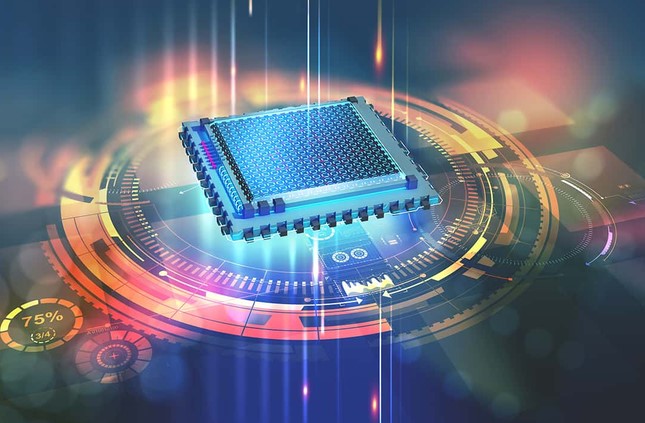
Every single day, petabytes of sensitive health records, financial transactions, and proprietary data travel through fiber-optic cables spanning the globe. But here is the cold, hard truth: under current internet protocols, no matter how complex our encryption ciphers are, they can eventually be cracked. In fact, standard public-key cryptography will become obsolete the moment fault-tolerant quantum computers reach commercial scale.
Having spent over a decade writing at the crossroads of advanced computing architectures, emerging network infrastructure, and health technology, I have watched security protocols evolve from simple password layers to complex end-to-end encryption. But nothing compares to the shift we are witnessing right now.
The future of quantum internet isn’t just about making streaming faster or reducing gaming latency; it is about building an unhackable fabric for human information exchange that operates on the fundamental laws of physics rather than software math.
What Exactly Is the Quantum Internet?
To understand the future of quantum internet, we must first clarify what it is not. It is not a replacement for your daily Wi-Fi router, nor will it simply render web pages in milliseconds.
Instead, it is a specialized network designed to transmit quantum information—specifically quantum bits or qubits—between quantum devices without converting them into standard digital signals.
The Twin Magic Analogy
Imagine having a pair of magical dice. You hold one die in New York, and your colleague holds the other in Singapore. No matter when or how hard you roll your die, if yours lands on a six, your colleague’s die instantly turns into a six as well—without any physical string or radio signal connecting them.
In quantum physics, this phenomenon is called quantum entanglement. It forms the core operational principle of the future of quantum internet, enabling instant correlation of information across vast physical distances.
How Quantum Networking Works Under the Hood
Standard internet traffic relies on classical binary code: electrical or optical pulses representing rigid 1s and 0s. The future of quantum internet, however, operates in a world of probabilistic state mechanics.
1. Quantum Superposition and Qubits
Unlike classical bits that must exist as either a 0 or a 1, a qubit can exist in a state of superposition—meaning it represents both 0 and 1 simultaneously until measured. This exponential scaling allows quantum networks to execute complex cryptographic synchronization that classical networks simply cannot handle.
2. Quantum Key Distribution (QKD)
One of the earliest functional implementations shaping the future of quantum internet is Quantum Key Distribution. QKD allows two communicating parties to produce a shared random secret key known only to them.
Because measuring a quantum state inherently alters or destroys it (due to the Observer Effect), any attempt by a hacker to eavesdrop on a QKD channel immediately collapses the quantum state.
+-------------------+        Quantum Channel        +-------------------+
|    Sender (Alice) | ============================> |  Receiver (Bob)   |
|  Prepares Qubits  |    (Qubits in Superposition)  | Measures Qubits   |
+-------------------+                               +-------------------+
          |                                                   |
          +-----------> [ Eavesdropper (Eve) ] <--------------+
                       Attempts to intercept!
                                 |
                     * Quantum State Collapses *
                     * Eavesdropping Detected! *
-
The Result: The system immediately flags the intrusion, burns the key, and aborts the transmission before any data is compromised.
3. Quantum Memory and Repeaters
In classical fiber networks, signal boosters amplifies light pulses as they decay over distance. But according to the No-Cloning Theorem in quantum mechanics, an arbitrary unknown quantum state cannot be precisely copied.
To transmit qubits over long distances, researchers are developing quantum repeaters—specialized hardware devices that store and swap quantum entanglement across intermediate network nodes without measuring or destroying the underlying state.
Why We Need Quantum Networks: Transformative Use Cases
During my technical consultations with health-tech security engineers, one concern consistently surfaces: data longevity. Cybercriminals are actively harvesting encrypted health data today to decrypt it years later when powerful quantum processors become available (a strategy known as “Harvest Now, Decrypt Later”).
The future of quantum internet directly solves this crisis across multiple industries:
-
Uncompromising Healthcare Data Security: Patient genomic sequences, medical histories, and clinical trial results can be transmitted between medical research centers with absolute mathematical privacy.
-
Distributed Quantum Cloud Computing: Connect small, localized quantum processors into a massive unified quantum supercomputer, enabling exponential jumps in molecular drug discovery and cancer therapy design.
-
Ultra-Precise Atomic Synchronization: Linking atomic clocks via quantum networks enables ultra-precise GPS, seismic detection systems, and deep-space telemetry.
-
Financial Infrastructure Defense: Global banking backbones can secure high-frequency trading networks against fraud and algorithmic interception.
Comparison: Classical Internet vs. Quantum Internet
To help visualize how the future of quantum internet differs from our existing network architecture, take a look at this side-by-side comparison:
| Metric / Feature | Classical Internet | Future Quantum Internet |
| Basic Unit of Data | Classical Bit ($0$ or $1$) | Qubit ($0$, $1$, or Superposition) |
| Core Physics Principle | Classical Electromagnetism | Entanglement & Superposition |
| Security Model | Mathematical complexity (Ciphers) | Laws of Quantum Physics (QKD) |
| Signal Amplification | Classical Optical Repeaters | Quantum Repeaters (Entanglement Swapping) |
| Primary Objective | Global mass data & media delivery | Secure key distribution & quantum node interconnects |
Expert Advice: Pro Tips and Hidden Pitfalls
If you are a tech strategist, developer, or IT leader looking ahead at the future of quantum internet, keep these critical insights on your radar:
💡 Pro Tip: Start Preparing for Post-Quantum Cryptography (PQC) Today
You don’t need to wait for a full quantum network to start protecting your data. Organizations should begin auditing their infrastructure for Post-Quantum Cryptography (PQC) algorithms—software-based cryptographic standards designed to resist attacks by both classical and quantum hardware while the physical quantum internet infrastructure is being built.
⚠️ Hidden Warning: The Quantum Distance Barrier
Don’t expect quantum routers in consumer homes anytime soon. Photons traveling through standard optical fiber experience signal loss, and because quantum states cannot be cloned, building reliable, low-noise quantum memory buffers remains one of the hardest engineering challenges of modern physics. Initial rollouts will strictly connect specialized data centers, government facilities, and research hubs.
Final Thoughts: The Horizon of Unbreakable Connectivity
The future of quantum internet represents far more than an incremental speed upgrade—it is a fundamental reinvention of global trust and data integrity. While technical hurdles like quantum repeater scalability and decoherence management remain, the progression from lab experiments to real-world testbeds is happening faster than many predicted.
As we move toward a hybrid network landscape where classical fiber and quantum channels coexist, one thing is certain: the way we secure human knowledge is about to change forever.
What’s Your Take?
Do you believe quantum key distribution will become standard enterprise protocol within the decade, or are software-based post-quantum algorithms enough for our security needs?
Leave a comment below with your thoughts or questions, and let’s start a conversation!
About The Author
