Next Generation Quantum Processors: What’s Coming Next
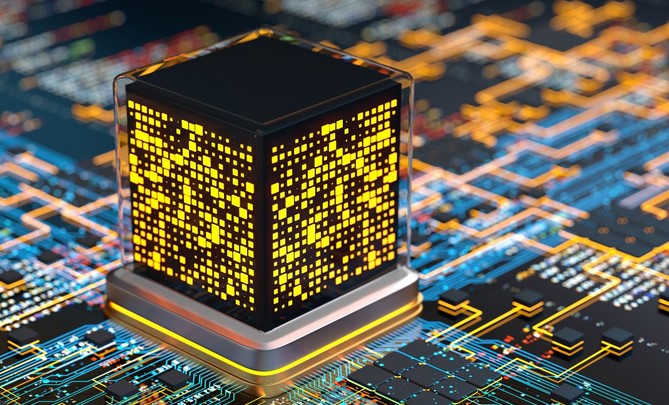
Imagine a supercomputer the size of a tennis court taking ten thousand years to crack a complex molecular riddle for a life-saving cancer drug. Now imagine a single silicon chip sliding into a specialized cooling cradle and solving that exact same mathematical puzzle in less than three minutes. This isn’t a scene from a Hollywood sci-fi script; it is the real-world threshold we are standing on right now.
Over my ten years writing about enterprise infrastructure and pioneering digital health tech, I have visited labs where silicon valley giants house their most experimental hardware. I have stood next to massive, gold-plated dilution refrigerators that hum like gentle beehives, keeping fragile chips cooled to temperatures colder than deep space.
Seeing that machinery up close changes your entire perspective. The tech industry is quietly moving away from traditional microchips, and the arrival of next generation quantum processors is about to disrupt everything from cyber security to personalized medicine.
Whether you are a tech enthusiast or a curious beginner trying to look beyond the corporate hype, let’s explore what is actually coming next in the world of quantum computing.
The Quantum Shift: Shifting from Bits to Qubits
To understand why this technology leaves your current smartphone or office PC in the dust, let’s look at a simple analogy. Think of a standard computer chip like a light switch that can only be turned completely ON (1) or completely OFF (0). Every email you send, video you stream, and game you play is just billions of these switches flipping between 1 and 0 at lightning speed.
A quantum processor operates on entirely different physics. Think of it instead like a spinning coin. While the coin is spinning on your desk, it isn’t just heads or tails; it is a fluid blur of both possibilities simultaneously.
In the quantum ecosystem, these physical switches are called qubits (quantum bits). By leveraging subatomic properties, a quantum chip can process a massive web of calculations all at once, rather than tackling them one by one like a standard machine.
Inside Next Generation Quantum Processors: The Architectural Breakthroughs
The first wave of quantum chips functioned primarily as delicate, error-prone laboratory experiments. As we move deeper into 2026, the tech has reached a crucial turning point, driven by three major structural shifts.
1. Advanced Fault-Tolerant Logical Qubits
The biggest problem with early quantum hardware was decoherence—the tendency for fragile qubits to miscalculate or stop working if they felt even a tiny vibration or a microscopic temperature change.
Next generation quantum processors are overcoming this barrier by grouping thousands of physical, unstable qubits into single, highly stable units called logical qubits. This architecture uses advanced error-correcting codes to spot and fix processing mistakes in real-time.
2. Topological Quantum Cores
Major industry players are steering away from traditional superconducting loops toward topological computing designs. These advanced chips split electrons apart virtually, manipulating them into braided patterns that are physically protected from external interference. It is the hardware equivalent of writing data in stone rather than drawing it in shifting sand.
3. Scalable Cryogenic Silicon Control
Until recently, a quantum chip required a messy jungle of coaxial copper cables running out of its cooling tank to connect with regular computers. Modern architectures now build control circuits out of specialized cryogenic CMOS silicon that sits right next to the quantum core inside the freezer, streamlining data paths and reducing energy loss.
+-------------------------+-----------------------------------+-----------------------------------+
| Feature                 | Traditional Silicon Processors    | Next-Gen Quantum Processors       |
+-------------------------+-----------------------------------+-----------------------------------+
| **Core Processing Unit**| Binary Bits (Static 0 or 1)       | Qubits (Superposition states)     |
| **Computing Logic**     | Linear (One path at a time)       | Parallel (Explores all paths)     |
| **Operating Climate**   | Room temperature or standard fans | Near Absolute Zero (-273°C)       |
| **Primary Strength**    | General apps, office work, streaming| Complex simulations & encryption  |
+-------------------------+-----------------------------------+-----------------------------------+
How This Tech Will Remake Your Everyday Reality
While you won’t see a quantum chip tucked inside a smartphone or video game console anytime soon, their raw processing power will reshape your life through cloud-connected applications.
Revolutionizing Drug Discovery and HealthTech
As a writer deeply embedded in health tech, this is where my personal excitement sits. Developing a new medicine currently takes over a decade of trial-and-error laboratory testing.
Quantum systems can simulate the exact atomic interactions of molecular compounds instantly on a screen. This allows researchers to discover customized therapies for genetic anomalies over a single afternoon.
Redefining Global Supply Chains and Logistics
Managing global shipping routes, weather disruptions, and resource allocation involves trillions of fluid variables. Quantum algorithms can evaluate every single shipping route on Earth simultaneously, instantly optimizing delivery paths to slash fuel consumption and protect global supply chains from unexpected bottlenecks.
Insider Insights: The Post-Quantum Encryption Threat
💡 Tips Pro: The Encryption Sunset Warning
While this computing revolution brings incredible breakthroughs, it comes with a hidden hazard. The mathematical algorithms securing our online bank accounts, medical records, and digital wallets can be easily cracked by a mature quantum system. Forward-thinking enterprise firms are already actively migrating toward Post-Quantum Cryptography (PQC) standards to secure sensitive corporate data before these processors scale up globally.
The most common misconception I hear from intermediate tech professionals is that quantum processors will completely replace standard computers.
In reality, they are specialized accelerators. For basic tasks like writing a document, sending an email, or editing a photo, a standard silicon chip will always remain faster and cheaper. Think of a quantum processor as a heavy-duty research telescope—it is incredibly powerful for peering into deep space, but you wouldn’t use it to read a book on your lap.
Preparing for the Quantum Horizon
The transition into the quantum era is not a sudden product launch; it is a steady, profound migration that is gathering massive momentum behind closed laboratory doors. By moving past the limitations of traditional binary computing, next generation quantum processors are unlocking solutions to industrial, medical, and environmental hurdles that we once considered mathematically impossible to solve.
As cloud providers begin integrating these exotic chips into accessible developer frameworks, the opportunity to interact with quantum logic is dropping down to the mainstream level. Staying informed on these foundational hardware shifts ensures you are ready to navigate the next major paradigm shift in human technology.
What Do You Think?
Does the idea of subatomic processing sound like incredible human progress, or does the threat to data encryption make you nervous about the future? Drop your thoughts and questions in the comments below—let’s chat about where this technology is heading next!
About The Author
