Smartwatch Battery Life: Which Models Last the Longest?
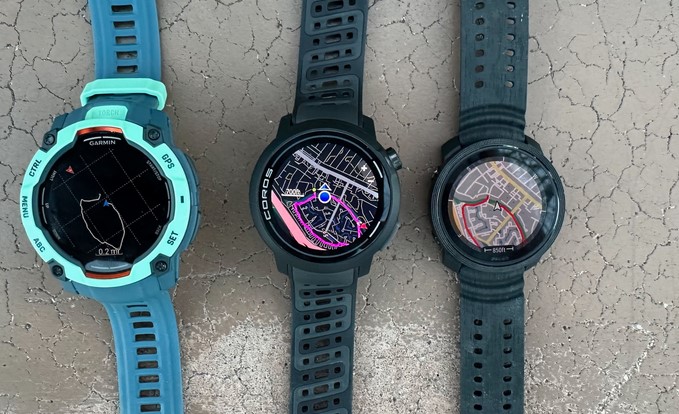
You are deep in the wilderness, crushing a challenging mountain trail on the final leg of a weekend trek. Your heart rate is elevated, your pacing is perfect, and you are just miles away from logging a personal record. You glance down at your wrist to check your coordinates, only to see a blank, lifeless black screen. Your premium wearable just died—again.
Over my ten years deploying tracking systems and testing physiological monitors in the HealthTech sector, I have encountered one absolute truth: a dead sensor tracks zero data. I once audited a clinical trial where patients were supposed to track their sleep data for a month. Nearly 30% of the metrics were lost simply because participants forgot to charge their devices or got frustrated by the daily charging ritual. That was the moment I realized that optimizing smartwatch battery life isn’t just a minor convenience; it is the absolute foundation of reliable health tracking.
If you are tired of being tethered to a magnetic charging puck every single night, you are not alone. Let’s dive into the mechanics of what drains your wearable and identify the exact models that will actually go the distance in 2026.
The Battery Bottleneck: Why Do Smartwatches Die So Fast?
To understand smartwatch battery life, think of your wearable as a high-performance sports car with a tiny gas tank. The engine consists of advanced health sensors (like PPG optical heart rate arrays), multi-frequency GPS systems, and bright AMOLED touchscreens.
When you turn on every feature simultaneously, it’s the equivalent of slamming on the gas pedal while running the air conditioning at maximum blast. Because the physical chassis of a watch must remain lightweight and elegant on your wrist, manufacturers are severely restricted by the physical size (measured in milliampere-hours, or mAh) of the lithium-ion battery they can squeeze inside.
The Display Dilemma: AMOLED vs. Memory-in-Pixel (MIP)
The biggest energy hog on your wrist is the screen technology.
-
AMOLED Displays: These are essentially miniature smartphone screens. They look stunningly vibrant, but lighting up those rich pixels requires massive amounts of power.
-
MIP Displays: These reflective screens use ambient sunlight to illuminate the dial. They lack the jaw-dropping contrast of AMOLED, but they consume near-zero power when static, acting as the ultimate secret weapon for extreme battery longevity.
The Endurance Champions: Top Long-Lasting Models Ranked
The wearable landscape in 2026 features distinct hardware categories depending on whether you value bright smart features or uninterrupted, multi-week tracking.
1. The Solar-Powered Titan: Garmin Fenix 8 Solar
For intermediate athletes, hikers, and anyone who despises charging cables, Garmin remains the undisputed heavyweight champion of endurance.
-
The Longevity Stats: Thanks to integrated photovoltaic solar rings embedded in the watch crystal and a highly efficient MIP screen, the Fenix 8 Solar can easily last up to 30 to 40 days in standard smartwatch mode.
-
The Tech Secret: It relies heavily on a specialized operating system designed to sip power, keeping heavy background application synchronization to an absolute minimum.
2. The Hybrid Balance: OnePlus Watch 3
If you absolutely insist on having a bright, rich touchscreen along with full smart app features but still want impressive battery metrics, the OnePlus Watch 3 is a masterclass in clever engineering.
-
Dual-Engine Architecture: This device utilizes two distinct processors running in tandem under the hood. One high-power chip handles complex interface animations, while a secondary, ultra-low-power co-processor manages background step counting and heart rate tracking.
-
The Results: This dual-chip configuration delivers an impressive 4 to 7 days of genuine battery performance even with heavy everyday usage.
3. The Balanced Multitasker: Amazfit T-Rex 3
For beginners who want rugged durability and exceptional longevity without breaking the bank, Amazfit has carved out a massive niche.
-
The Longevity Stats: The T-Rex 3 packs a massive battery capacity relative to its chassis size, comfortably yielding up to 20 days of standard operating life.
-
The Value: It offers built-in dual-band GPS tracking and continuous blood oxygen saturation (SpO2) monitoring without completely tanking your battery reserves within 48 hours.
Head-to-Head Endurance Comparison
Navigating these distinct hardware approaches depends entirely on how often you plan to push your device’s tracking capabilities to the absolute limit.
| Smartwatch Model | Screen Type | Typical Battery Life | Heavy GPS Tracking Life | Target User |
| Garmin Fenix 8 Solar | Transflective MIP | 30–40 Days | Up to 100 Hours | Endurance Athletes & Hikers |
| Amazfit T-Rex 3 | AMOLED | 14–20 Days | Up to 40 Hours | Outdoor Enthusiasts / Value Seekers |
| OnePlus Watch 3 | Dual-Layer AMOLED | 4–7 Days | Up to 15 Hours | Everyday Users / Tech Enthusiasts |
| Apple Watch Ultra 3 | Ultra-Bright AMOLED | 2–3 Days | Up to 12 Hours | Apple Ecosystem Loyalists |
Expert Advice: How to Maximize Your Wearable’s Lifespan
You do not necessarily need to buy a brand-new watch to improve your daily power consumption. Throughout my years optimizing tracking deployments, I have used a few simple software calibration steps to save hours of power.
Pro Tip: Tweak Your GPS Refresh Rates
By default, your watch likely tracks your position using high-accuracy mode, pinging multiple satellite constellations every single second. If you are going for a long walk or bike ride where turn-by-turn precision isn’t critically vital, dive into your activity settings and switch your location tracking to “UltraTrac” or intelligent power-saving GPS mode. This single adjustment can instantly triple your battery life during outdoor workouts.
The Continuous SpO2 Trap
Many beginners turn on every automated health sensor out of the box, including continuous background pulse oximetry (SpO2 monitoring). Unless you have a specific medical reason or are actively acclimatizing to high mountain altitudes, turn off all-day blood oxygen tracking. Running that specific red LED sensor around the clock is one of the quickest ways to drain your battery overnight.
The Hidden Cost of Lithium-Ion Degradation
Before you settle on a specific device, it is important to understand the realities of long-term battery health.
All modern smartwatches rely on lithium-ion cells that naturally degrade over time. If a watch only provides 24 hours of juice when brand new, that window will inevitably shrink to roughly 14–16 hours after two years of daily charge-and-discharge cycles.
By purchasing a device that boasts a base battery metric of at least 5 to 7 days, you ensure that even after years of continuous physical degradation, the device will still comfortably outlast a long weekend trip without forcing you into battery anxiety.
Conclusion: Reclaim Your Freedom from the Wall Outlet
Ultimately, optimizing your smartwatch battery life is all about tailoring your technology to your actual lifestyle. If you want a mini-smartphone on your wrist and don’t mind a nightly charging routine, a standard high-end flagship will serve you well. But if your goal is seamless, uninterrupted health tracking, deep sleep analysis, and outdoor adventure, choosing a dedicated endurance champion will completely change how you interact with your wearable tech.
Are you getting ready to upgrade your current device because you are sick of the daily charging routine, or are you picking out your very first long-distance sports tracker? Which model in this guide caught your eye? Let me know your thoughts in the comments below—let’s optimize your setup and get you off the grid!
About The Author
