Endpoint Protection Platforms: Securing Business Networks
Posted On September 15, 2026
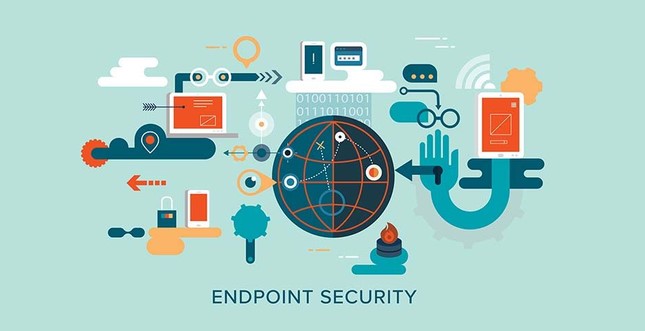
Ten years ago, securing a company network meant locking down a central office full of desktop computers behind a single, sturdy firewall. As long as you kept the perimeter safe, everything inside was relatively secure.
Then came remote work, cloud migration, and the boom of connected health monitoring devices in the HealthTech spaces I’ve spent the last decade building. Overnight, that tidy perimeter dissolved. Suddenly, every employee’s laptop at a local coffee shop, every tablet on a hospital floor, and every smartphone checking work email became a front door to the core network.
If you are trying to keep a modern business network safe, relying on traditional antivirus is like putting a padlock on your front door while leaving all your ground-floor windows wide open. This is precisely where endpoint protection platforms step in to bridge the gap.
What Exactly Are Endpoint Protection Platforms?
An endpoint protection platform (EPP) is an integrated suite of security technologies designed to detect, prevent, and block cyber threats at the device level. An “endpoint” refers to any hardware component that connects to your organization’s network—laptops, desktops, mobile phones, virtual servers, and specialized digital equipment.
+-------------------------------------------------------------------+
|                   CENTRALIZED MANAGEMENT CONSOLE                  |
+-------------------------------------------------------------------+
                                  |
         +------------------------+------------------------+
         |                        |                        |
         v                        v                        v
+------------------+     +------------------+     +------------------+
| Remote Workstation|     | Healthcare Tablet|     | On-Prem Server   |
| (EPP Agent)      |     | (EPP Agent)      |     | (EPP Agent)      |
+------------------+     +------------------+     +------------------+
To put it in simple terms, imagine a high-security office building:
-
Traditional Antivirus: Works like a security guard stationed at the main entrance who checks IDs against a list of known banned individuals. If a bad actor isn’t on that paper list, they walk right in.
-
Endpoint Protection Platform: Works like an intelligent, automated security detail assigned to every single room. It monitors behavior in real time, locks doors automatically when suspicious activity occurs, and isolates compromised areas instantly to protect the rest of the building.
EPPs do not just check files against known virus databases; they analyze behavior, employ machine learning, and coordinate defense strategies across your entire fleet from a single centralized console.
The Anatomy of Next-Gen Endpoint Defense
In my years consulting for technology teams transitioning to hybrid models, I have watched security architectures evolve from basic signature matching to sophisticated, multi-layered engines. Modern endpoint protection platforms combine several core capabilities into one lightweight piece of software:
1. Next-Generation Antivirus (NGAV)
While legacy antivirus relies on static file signatures, NGAV uses behavioral analysis and machine learning. It looks at what a process does rather than just what it looks like. If an application tries to encrypt half your hard drive in three seconds, NGAV stops it immediately, regardless of whether it recognizes the file name.
2. Endpoint Detection and Response (EDR)
If NGAV is the preventative shield, EDR is the flight recorder and detective combined. EDR continuously records endpoint activities, giving security teams the visibility needed to investigate how a threat breached the system, how far it spread, and how to contain it before damage occurs.
3. Data Loss Prevention (DLP)
DLP rules prevent sensitive operational data, trade secrets, or patient health information (PHI) from leaving your control. It stops users from accidentally uploading sensitive files to personal cloud storage or copying critical databases onto unencrypted USB drives.
Why Traditional Security Fails Modern Businesses
During an infrastructure audit I led a few years back for a growing telehealth provider, we ran a simulated breach scenario. The internal IT team felt confident because their central firewall was up to date.
However, we compromised a single remote workstation through a targeted phishing link. Because the device lacked a unified endpoint protection platform, the threat bypassed local defenses, harvested credentials stored in the browser, and moved laterally across the network into administrative databases. The entire attack took under 45 minutes.
Here is why old-school defenses no longer cut it:
-
The Perimeter is Gone: Employees access cloud tools from varied networks globally. You can no longer assume traffic originating from inside the network is safe.
-
Zero-Day Threats Are the Norm: Cybercriminals craft unique malware strains continuously. Signature-based tools cannot catch threats they have never seen before.
-
Fileless Attacks: Modern hackers frequently use fileless malware—exploiting legitimate administrative tools already installed on Windows or macOS (like PowerShell) to execute malicious commands straight from system memory.
Pro Tips & Hidden Pitfalls
Deploying security tools across dozens or hundreds of devices sounds straightforward on paper, but practical implementation always brings hidden friction. Keep these insights in mind:
💡 Pro Tip: Prioritize Agent Performance
A security platform is useless if your team disables it because it slows down their machines. Before committing to a vendor, pilot the EPP agent on lower-spec hardware used by your team. Ensure memory usage remains low during real-time scanning.
⚠️ Hidden Warning: Beware of “Alert Fatigue”
Out-of-the-box configurations often flag dozens of harmless administrative tasks as critical threats daily. If your IT team receives 200 false alarms every morning, they will eventually ignore a real breach. Spend time fine-tuning your detection thresholds during the first 30 days of implementation.
Key Capabilities Checklist for Buyers
When evaluating EPP solutions for your organization, use this essential checklist to compare platforms effectively:
-
Behavioral Machine Learning: Capability to identify zero-day exploits without relying purely on signature updates.
-
Centralized Cloud Management: A single dashboard to deploy agents, manage policies, and view device health.
-
Automated Remediation: Ability to isolate infected devices from the network instantly and roll back modified files.
-
Cross-Platform Support: Seamless operation across Windows, macOS, Linux, iOS, and Android endpoints.
-
Low System Resource Overhead: Minimal CPU and RAM utilization during peak working hours.
Taking the First Step Toward a Secure Network
Securing your business environment does not require an enterprise budget or a dedicated army of cybersecurity analysts. It starts with accepting a simple reality: your endpoints are your true network perimeter today.
By replacing fragmented security utilities with a centralized endpoint protection platform, you give your business the visibility and automated resilience required to navigate modern cyber threats confidently.
What’s Your Current Security Strategy?
How is your organization managing device security across hybrid or remote teams today? Have you already transitioned to an integrated EPP solution, or are you still relying on traditional antivirus software?
Drop your thoughts, challenges, or questions in the comments below—I’d love to join the discussion and share more technical insights!
About The Author
